


150 000 CZK
| 6 250 EUR
Lot 01
ENTHRONED MADONNA
um 1300
89 x 50 x 30 cm (h x b x t)
Rufpreis
Verkauft
nach auktion verkauft
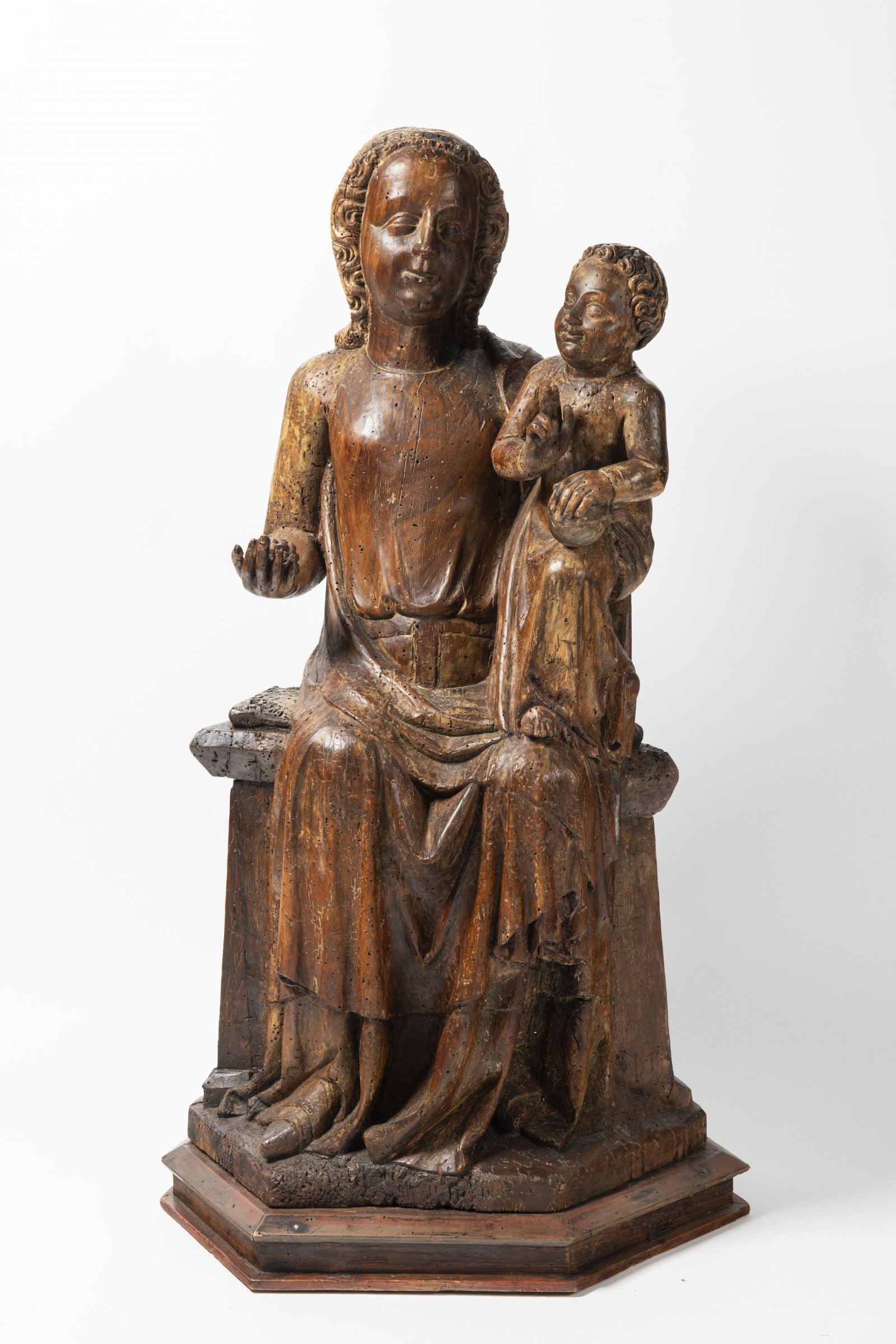
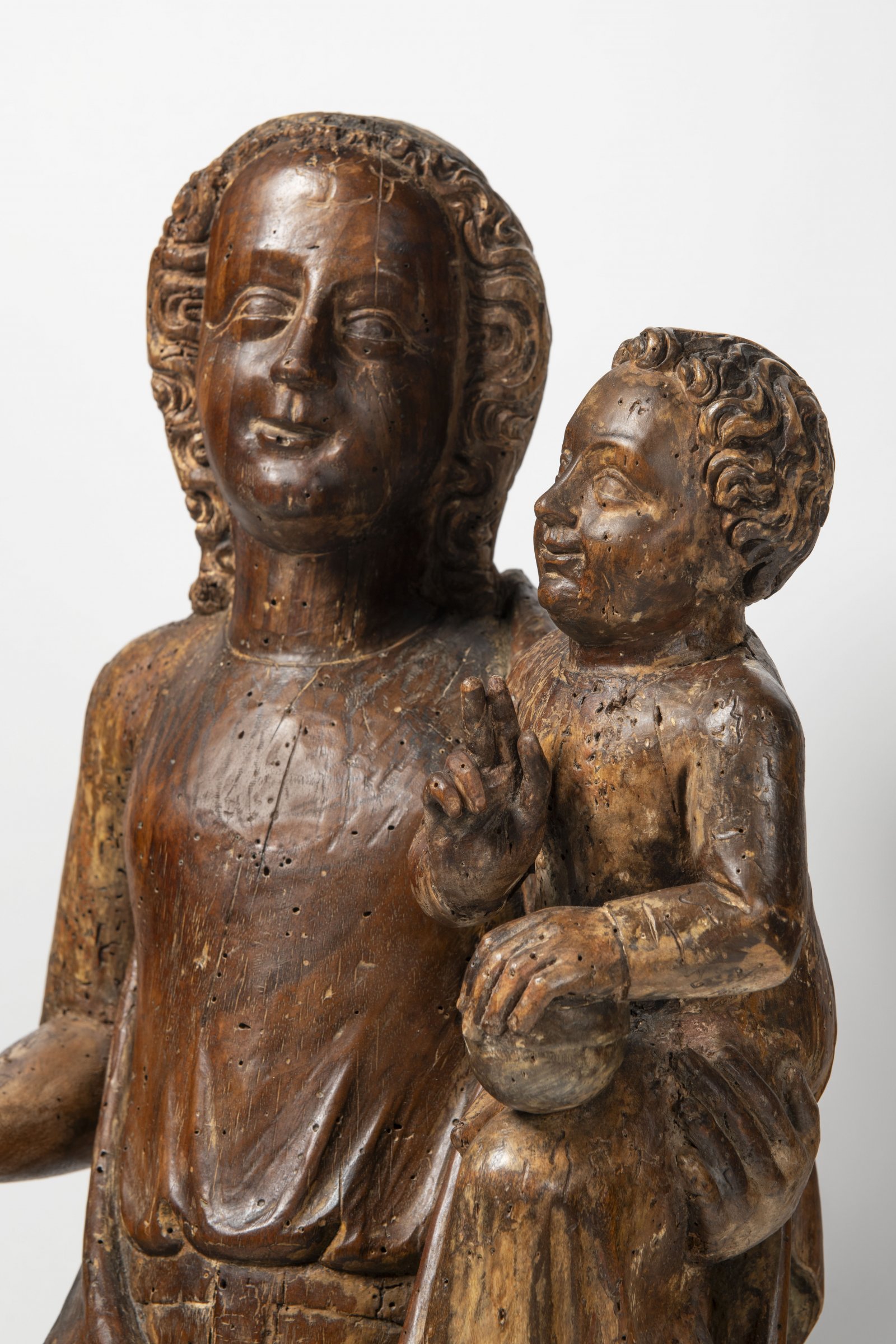
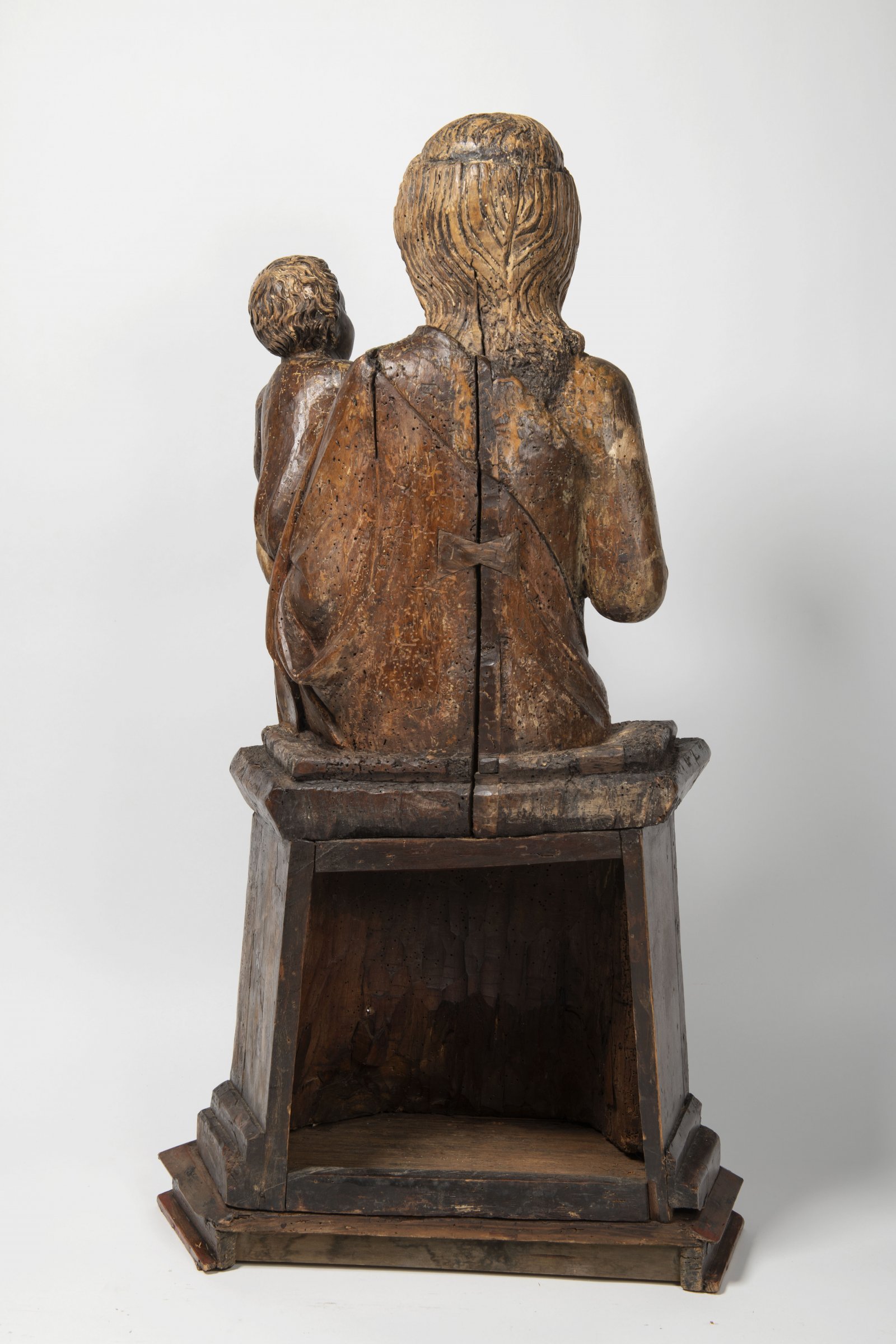
The depiction of the Virgin Mary with the Child on a throne, which draws directly on the Byzantine tradition and was reinterpreted in the West under the name Sedes Sapientiae, became widespread between the 13th and 14th centuries and eventually emerged as one of the most popular iconographic motifs in medieval sculpture. This Latin term, which can be translated as “Throne of Wisdom,” refers to Mary’s role as the support of the Incarnate Word, an idea already present in the writings of Peter Damian and Guibert of Nogent in the 11th and 12th centuries, where an analogy is drawn between the Mother of God and the throne of King Solomon. The composition depicts Mary with the Child in a strict frontal pose, whose rigidity is softened by a subtle turn and the asymmetry introduced by the figure of Jesus. The Virgin Mary has a majestic and distinctly monumental appearance, seated on a low throne without a backrest, decorated with simple horizontal moldings. The figure of the upright Child, with a blessing gesture and adult features in the style of the period, symbolized the embodiment of divine wisdom. It is interesting that the Madonna’s gaze is directed both toward the Child and simultaneously toward the viewer. The back of the throne has a cavity, likely for storing relics and reducing weight. In her right hand, Mary holds a bunch of grapes in an obvious Eucharistic symbolism; with his left hand, the infant Jesus holds a sphere or an apple as a symbol of original sin. Mary’s head likely originally bore a hammered crown of precious metal, as evidenced by traces on the crown of her carved hair.
Andere Auktionsgegenstände
Lot 1 ENTHRONED MADONNA
Rufpreis150 000 CZK | 6 250 EUR
Verkauft
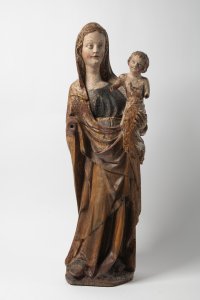
Lot 2 MADONNA
Rufpreis150 000 CZK | 6 250 EUR
Erzielter Preis
280 000 CZK | 11 667 EUR
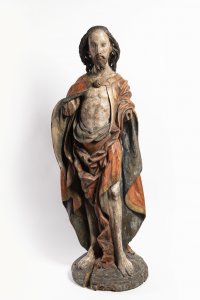
Lot 3 TRIUMPHANT CHRIST
Rufpreis110 000 CZK | 4 583 EUR
Erzielter Preis
270 000 CZK | 11 250 EUR
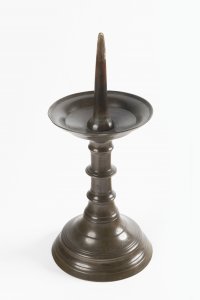
Lot 4 GOTHIC CANDLESTICK
Rufpreis25 000 CZK | 1 042 EUR
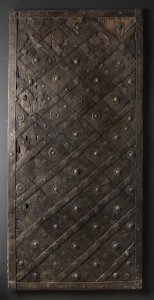
Lot 5 RENAISSANCE DOOR
Rufpreis15 000 CZK | 625 EUR
Erzielter Preis
31 000 CZK | 1 292 EUR
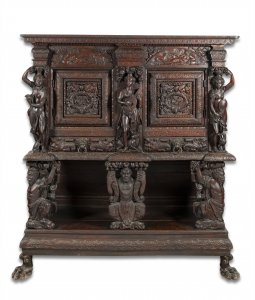
Lot 6 IMPRESSIVE MANNERIST DRESSER
Rufpreis250 000 CZK | 10 417 EUR
Erzielter Preis
340 000 CZK | 14 167 EUR
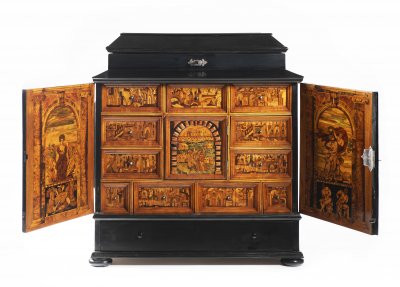
Lot 7 MANNERIST CABINET
Rufpreis75 000 CZK | 3 125 EUR
Erzielter Preis
75 000 CZK | 3 125 EUR
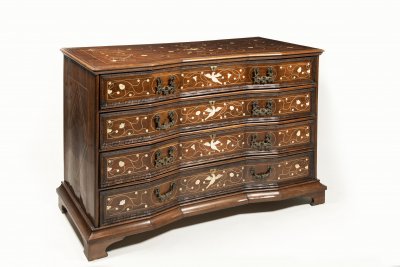
Lot 8 MANNERIST WRITING CHEST OF DRAWERS
Rufpreis75 000 CZK | 3 125 EUR
Erzielter Preis
75 000 CZK | 3 125 EUR
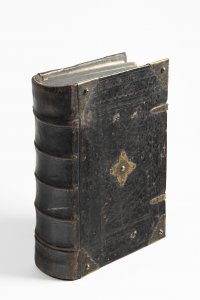
Lot 9 THE PILGRIMAGE OF THE SAINTS
Rufpreis45 000 CZK | 1 875 EUR
Erzielter Preis
65 000 CZK | 2 708 EUR
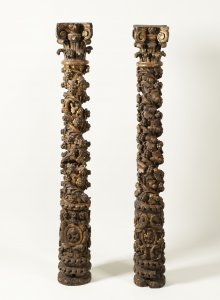
Lot 10 PAIR OF BAROQUE COLUMNS
Rufpreis32 000 CZK | 1 333 EUR
Erzielter Preis
42 000 CZK | 1 750 EUR
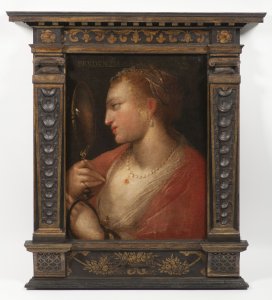
Lot 11 ALLEGORY OF PRUDENCE
Rufpreis65 000 CZK | 2 708 EUR
Erzielter Preis
85 000 CZK | 3 542 EUR
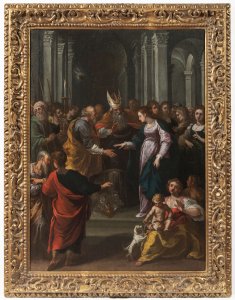
Lot 12 MARRIAGE OF THE VIRGIN
Rufpreis280 000 CZK | 11 667 EUR